






Pedestrian Accidents and Injuries
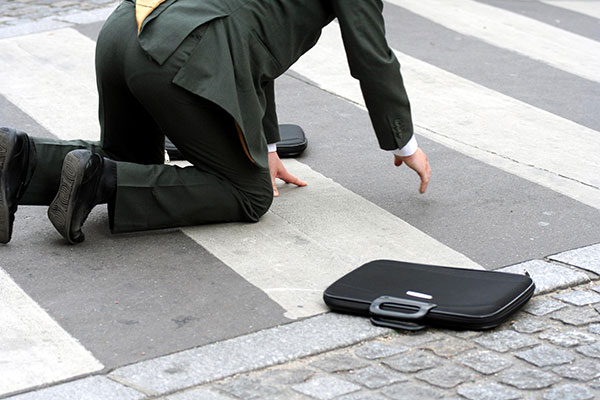
The state of Oklahoma tracks and computes the rate of Pedestrian accidents via the Oklahoma Department of Public Safety. In any given year, there are nearly 700 accidents reported that involve a pedestrian. Of these numbers, over 150 are incapacitating, while nearly 70 are fatal. In addition, the rates by county were computed. As a result, it was learned Oklahoma and Tulsa Counties have the most car and pedestrian accidents.
As a rule, in the United States, we are taught to recognize that pedestrians always have the right of way. This is true if you are walking in marked areas. It is important to note as pedestrians, we do not have the right of way in unmarked areas. This is commonly known as “jaywalking”. In unmarked areas (middle of the street, not at a crosswalk) pedestrians are required and expected to yield to oncoming traffic in order to avoid a collision.
It is not surprising that unmarked areas or jaywalking are also where pedestrian and auto collisions typically happen. Actually, close to three-fifths of American pedestrian deaths have occurred outside of crosswalks while less than one fifth has occurred in close proximity to a crosswalk. (If you have children, teach them early to go to the crosswalk before crossing).
Most Common Causes of Pedestrian-Auto Accidents
On average, nearly 5,000 pedestrians are killed each year in the United States by an automobile. The National Highway Traffic Safety Administration (NHTSA) has taken the analysis a step further by breaking this number down. The NHTSA has found that every eight minutes a pedestrian is killed in a collision across our roadways. Unfortunately, pedestrians often believe if they can see a vehicle, the person driving the vehicle can see them. This is simply not the case. Some of the most common causes of pedestrian auto accidents include:
- Failing to Stop at an Intersection
- Jaywalking
As responsible members of this community, both drivers and pedestrians must be aware of each other and pay attention at all times. As the old saying goes; remember to look both ways before crossing the road.
Types of Pedestrian-Auto Accident Injuries
In vehicular accidents where a pedestrian is involved, it is most often the pedestrian who suffers the most and most serious injuries. The severity of the injuries typically depends on the speed the car was traveling, along with the size of the vehicle. In any case, the force created by an automobile which strikes an unprotected individual frequently results in serious injuries and possible death. Some of the most common injuries include:
- Back Injuries
- Broken bones
- Concussion Injuries
- Dental Injuries
- Dislocated Joints
- Facial Injuries
- Internal Bleeding
- Lacerations
- Loss of Limb
- Neck Injuries
- Road Rash
- Skull Fractures
- Spinal Cord Injuries
- Traumatic Brain Injuries
- Wrongful Death
Remember, when a pedestrian or any type of accident happens, it is wise to seek medical treatment because not all injuries are immediately apparent. A personal injury attorney will also provide you with any necessary documentation and advisement that you may need if you wish to recover damages in a situation when the incident occurred because of a negligent driver.